The architect
Jean Nouvel conceived the building as a museum-city rising beside the sea.
On Saadiyat Island, works from different periods and cultures come together to tell a shared story of humanity.
The story began in March 2007 with an intergovernmental agreement between the United Arab Emirates and France. Louvre Abu Dhabi opened on Saadiyat Island in November 2017, becoming the first universal museum in the Arab world.
Here, “universal” describes a way of telling history. The galleries are not divided by country; works from distant regions are placed in conversation across time, theme and human experience. Unexpected likenesses emerge between civilisations that may never have met.
The partnership brings together expertise from the UAE and France. Agence France-Muséums coordinates the contribution of 17 French cultural institutions, from major loans to specialist knowledge and professional support.
Jean Nouvel conceived the building as a museum-city rising beside the sea.
The diameter of the silver dome—the defining silhouette of the museum.
The dome weighs roughly as much as the Eiffel Tower, yet appears to float above the galleries.
Four outer layers of steel and four inner layers of aluminium form a pattern of 7,850 stars.
Sunlight filters through the starry pattern, recalling light falling through palm leaves.
Beneath the dome stand 55 white buildings, 23 of them galleries, threaded with passages and water.
The journey begins with the first settlements and concludes in the contemporary world. Around 600 works from the museum’s own collection and international loans are regularly rotated, so a return visit can bring entirely new encounters.
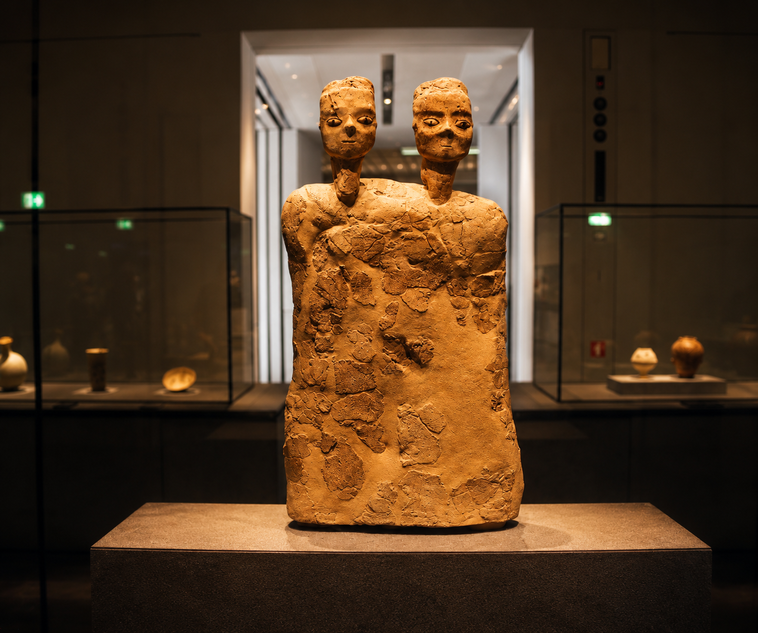
Settlements, early systems of power, the birth of writing and the rise of great civilisations.
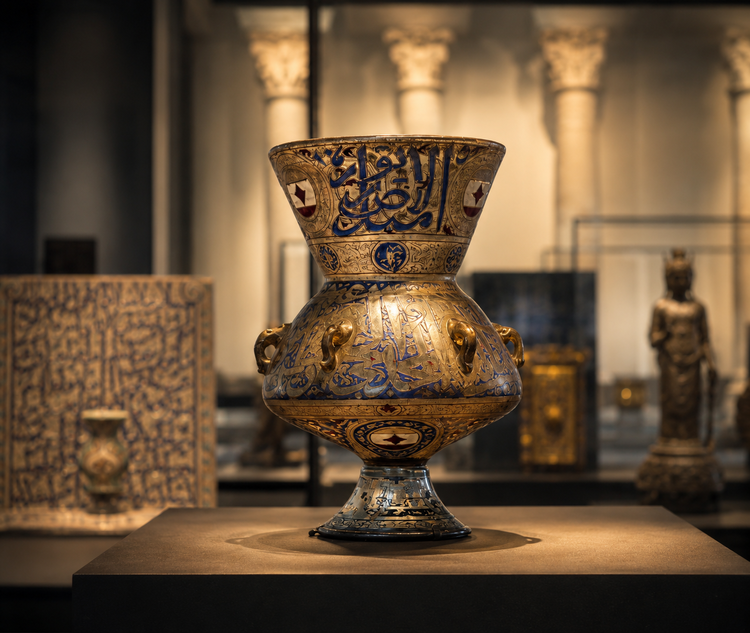
Shared sacred stories and the movement of ideas between Asia, the Mediterranean and Europe.
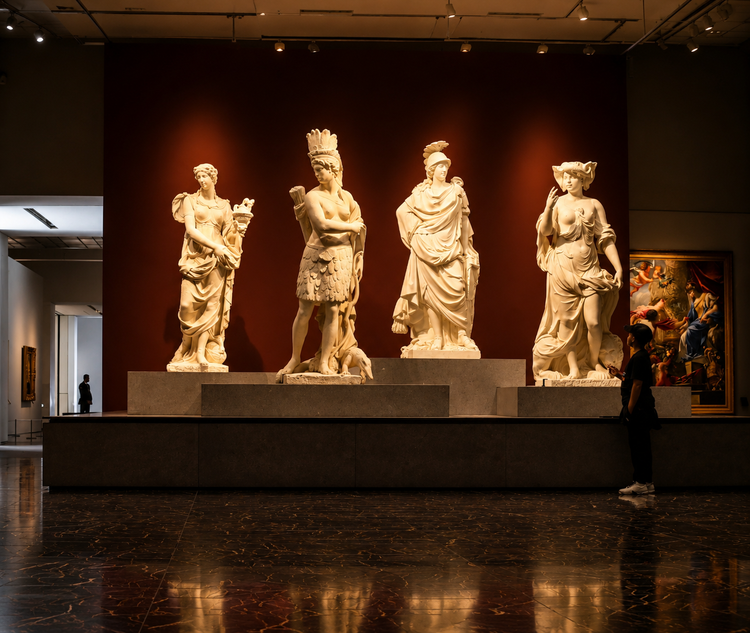
Scientific discovery, ocean voyages, new states and changing patterns of everyday life.
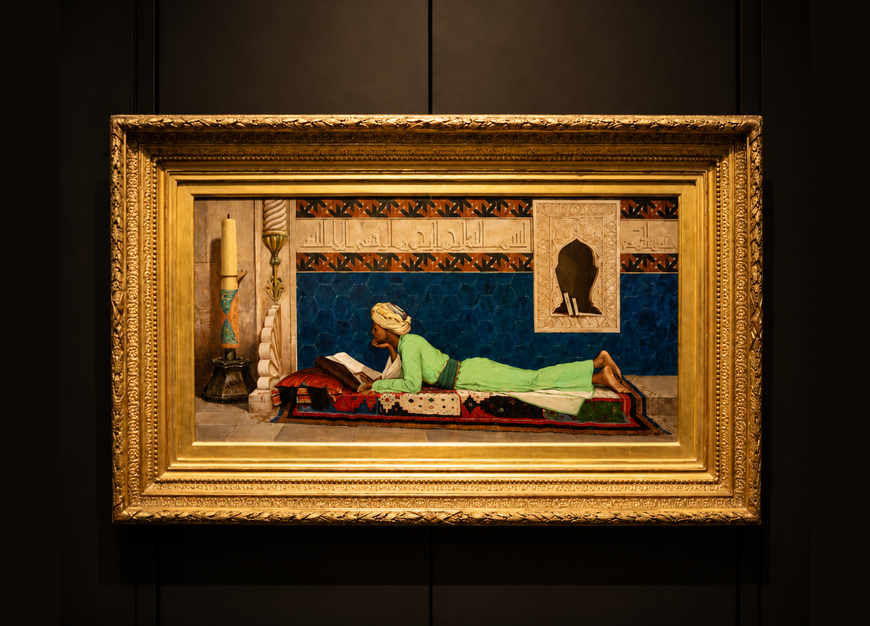
Industry, photography, modernism and the artistic questions that continue to shape our time.
Instead of separate “Egypt”, “China” or “Europe” rooms, works made at the same moment are shown together, revealing both shared ideas and profound differences.
The museum’s own holdings are joined by international loans. Their rotation gives each visit a subtly different rhythm.
White pavilions, water, shade and the moving sun create a route of their own. The dome is both an emblem and an ingenious source of shelter.
The Children’s Museum, designed principally for ages six to twelve, introduces art through play, movement and hands-on discovery.
Allow two or three hours for a first visit. Begin beneath the dome, then follow the galleries chronologically. Do not try to absorb everything: a handful of carefully chosen works can reveal more than a hurried circuit of the entire museum.