Astrolabe
A precision instrument that connected astronomy, timekeeping, navigation and faith.
Astrolabe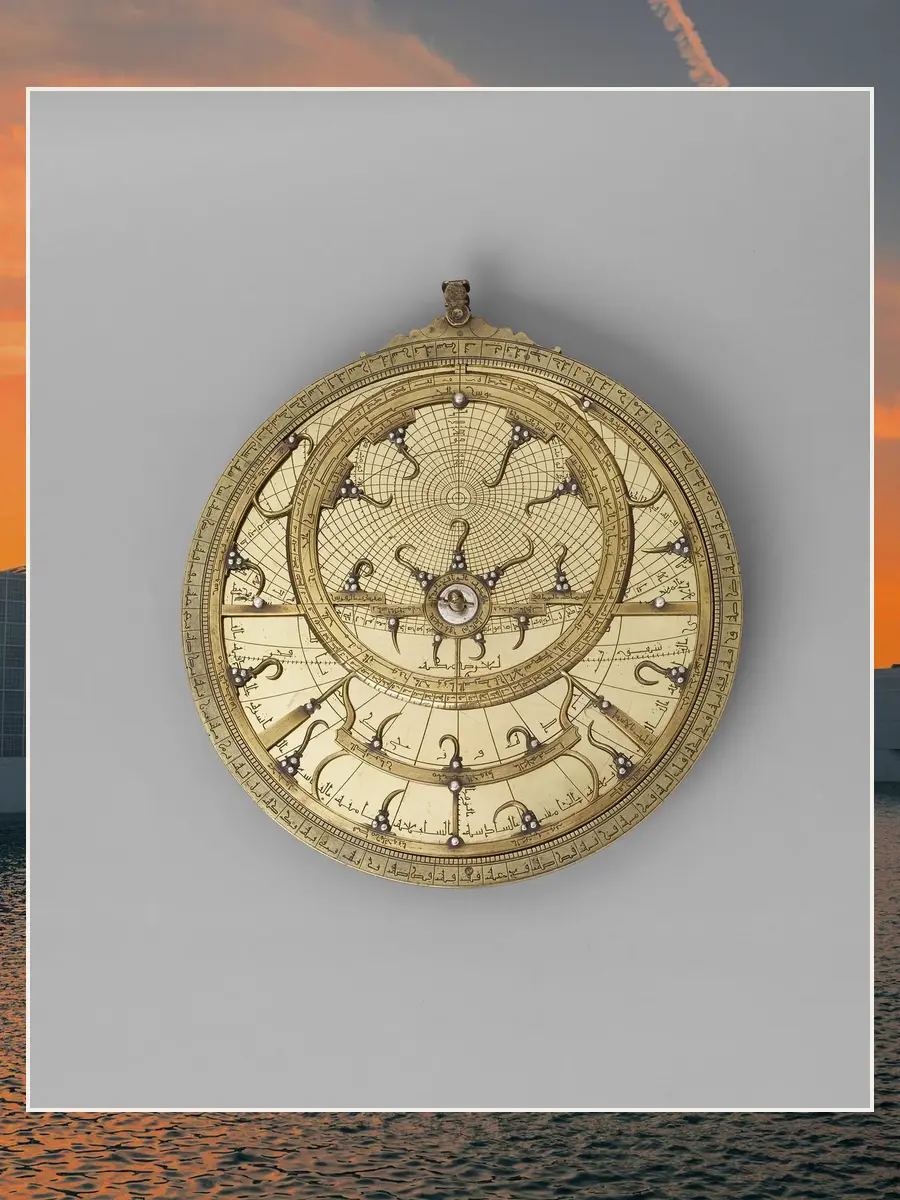
- Period
- 1726–1727
- Origin
- Meknes, Morocco
- Material
- Brass and silver
An astrolabe is often described as a portable model of the heavens. By turning its moving parts and reading its scales, an observer could tell the time, measure the altitude of celestial bodies and solve practical problems in travel, astronomy and religious life.
This example was made in Meknes in 1726–27. Fine engraving and silver details show that precision and beauty were never treated as opposites. The dense network of lines had to remain legible, so every ornament ultimately serves the instrument’s purpose.
The object is also a reminder that knowledge grows through exchange. Ancient geometry, Islamic astronomy and later European research all meet in the long history of an instrument refined by generations of makers.
Source and further information