Funerary Servant for Pharaoh Seti I
This deep-blue shabti was intended to serve Pharaoh Seti I in the afterlife.
Funerary Servant for Pharaoh Seti I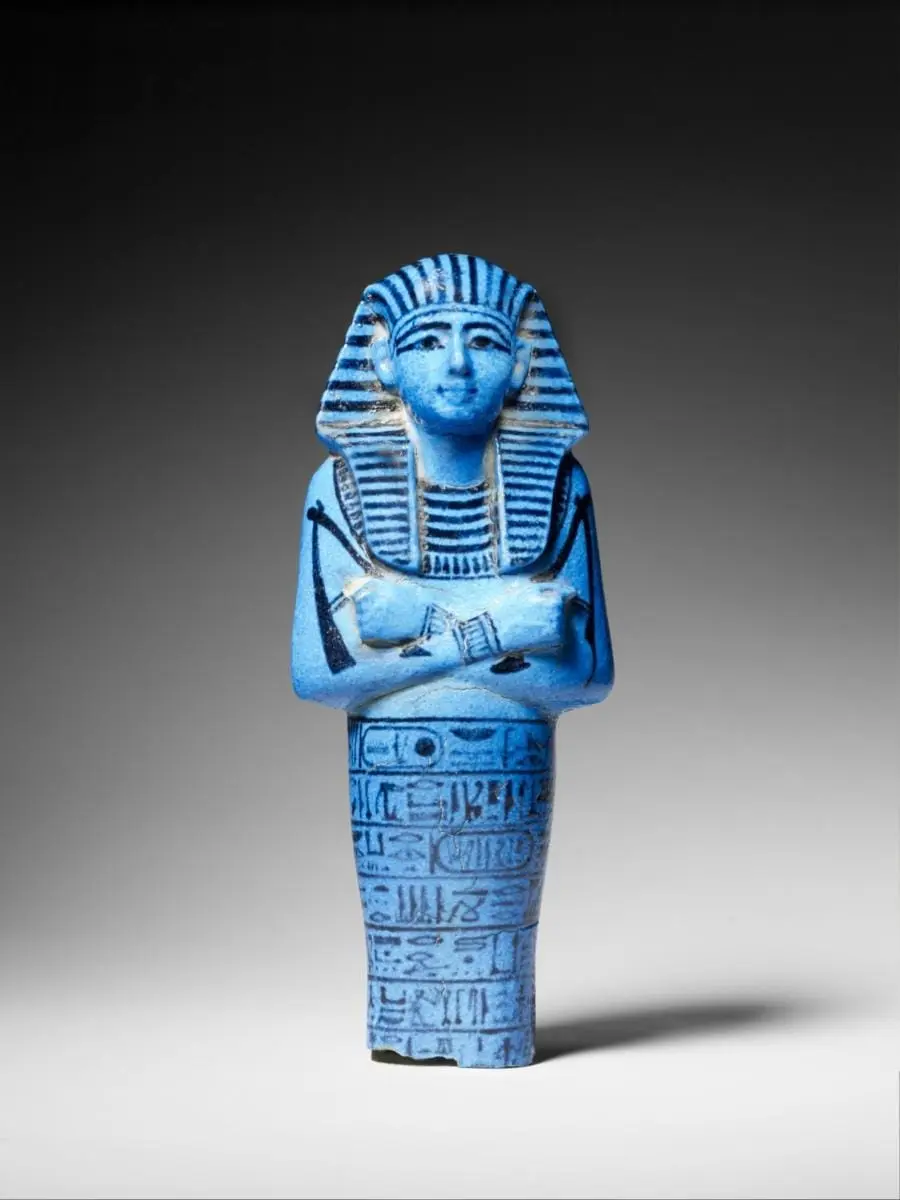
- Period
- c. 1290 BCE
- Origin
- Valley of the Kings, Egypt
- Material
- Faience
The ancient Egyptians placed shabti figures in tombs as servants for the dead. Once animated by a spell, they were expected to perform any labour required of their owner in the next world. This imposing example was made for Seti I, one of the great pharaohs of the Nineteenth Dynasty.
Its scale, confident modelling and luminous blue glaze give the figure an extraordinary presence. Arms folded across the chest and lines of inscription turn a small funerary object into an image of perpetual service. The colour evokes precious materials while also carrying associations with the sky and rebirth.
Here belief, writing and craftsmanship are inseparable. Nothing is merely decorative: form, colour and hieroglyphs work together to give the object its intended magical power.
Source and further information